|
|
|
|
|
|
|
|
|
German Parkas When Antwerp was liberated by the
British Army in September 1944, the E. Reitz Uniformwerke (uniform factory) in
Merksem was captured. This was a plant of the German firm E&W Reitz
Uniformwerk owned by Erich and Wilhelm Reitz. The company had a main warehouse
on the Albert Canal at Merksem and a number of outlying clothing depots. The
firm produced a large variety of uniforms for the German armed forces during the
war.1 When their warehouses were captured by the Allies, the upper portion of the
Winteranzug (Winter Uniform) proved to be a much photographed, if not
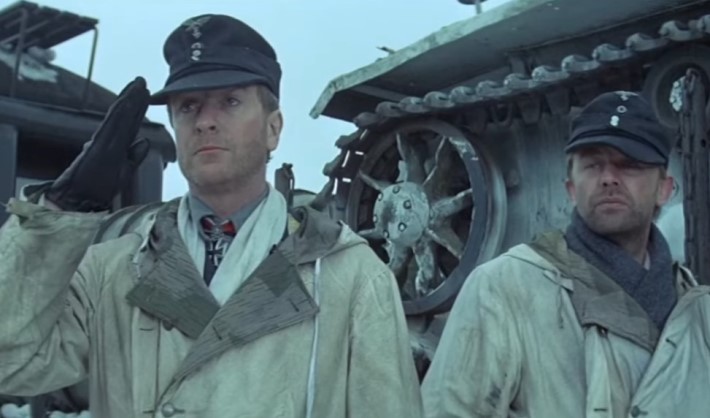
actually popular, bit of captured war booty. The German Winter Uniform was developed as a result of the first winter of the German's campaign in the Soviet Union. The standard issue greatcoat proved inadequate to protect soldiers from the bitter cold of the Russian winter. A thickly padded uniform (produced in three different grades of thermal protection) consisting of pants and parka was introduced in the autumn of 1942. The initial models were reversible with identical details inside and out, with one side in white for use in snow and the other in mouse grey. Later productions had the mouse grey material replaced by the Army's splinter pattern camouflage and the later "tan-water" or "marsh" pattern camouflage. Other variations included non-reversible models, and unpadded versions intended only for camouflage rather than thermal protection.2
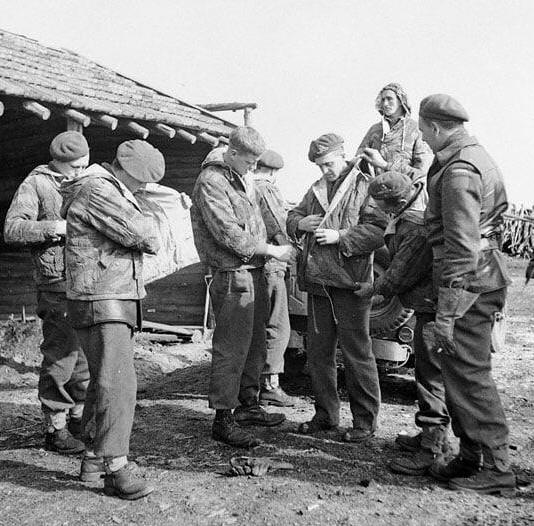
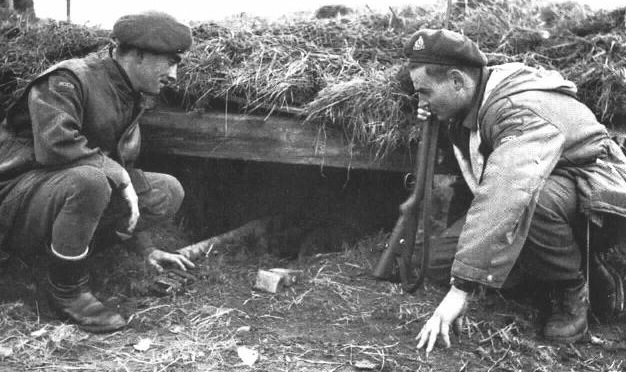
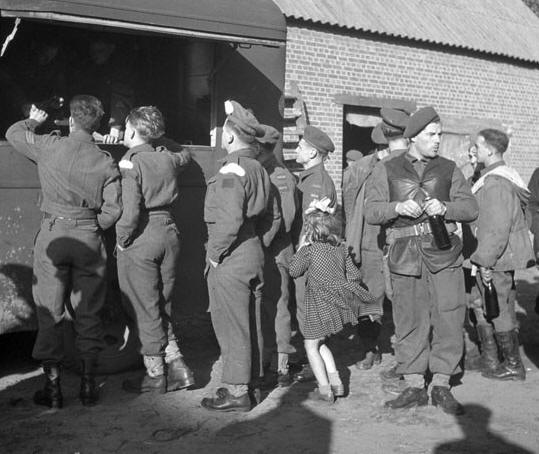
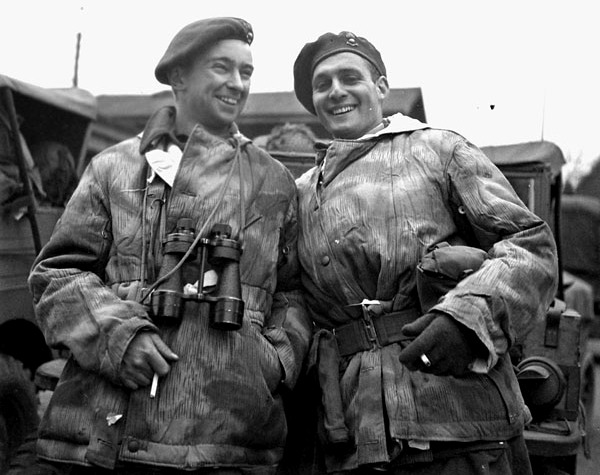
Canadian Use It's unclear how much sanction was provided for the use of captured enemy clothing and equipment. Farley Mowat wrote about wearing German jackboots - though after he left his duties as an infantry platoon commander and transitioned into a staff posting with brigade headquarters. There is photographic evidence that the parkas were taken into wear by at least a few individuals serving in Canadian units after the capture of the warehouses around Antwerp. It seems unlikely they would have been worn in action, but Canadian use seems largely anecdotal and confined to a few photos. One suspects these were most commonly worn by soldiers in units of the supporting arms, or support elements of the combat arms units, rather than front line infantrymen.
Notes
|


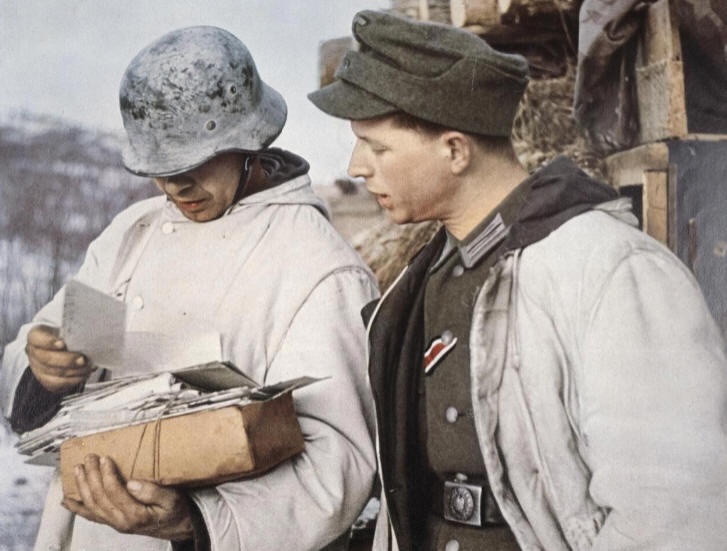 Contemporary colour photo showing the parka in use on the Eastern
Front.
Contemporary colour photo showing the parka in use on the Eastern
Front.